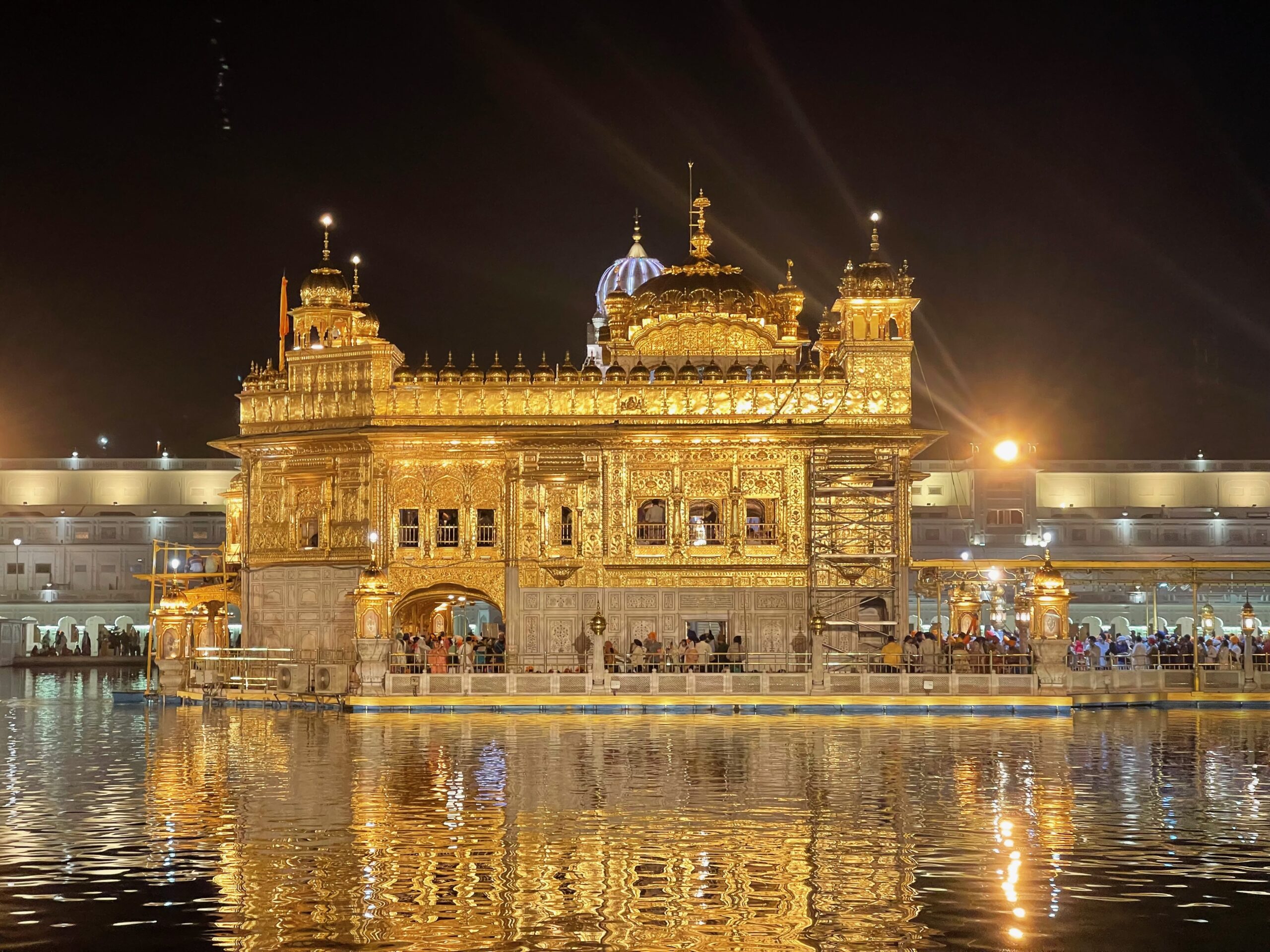
- Going to a university in the south (Texas A&M), the topic of religion frequently came up as it was the core identity of many students who went there (specifically Christianity, but Islam, Hinduism, etc., were also highly prevalent).
- I can’t count the number of times I’ve been asked, “So, what religion are you?” when talking to someone for the first time, usually after they told me that much of their free time is spent in religious-related activities.
- This was crazy to me, because while I’ve definitely had those conversations while growing up in central Pennsylvania, it wasn’t something you were just asked casually when meeting someone.
- While this could be somewhat tedious at times (since I had to answer the same types of questions so many times, like, “What religion are you?”), it ultimately shed a bit more light on what I truly believed and how I felt about the topic of religion.
- Even more importantly, I was also able to gain a deeper understanding of the identities of my friends and colleagues through these conversations, which allowed me to be a better friend to them.
- Also, I know this topic can be unfortunately somewhat divisive, so I encourage you to try to read it with an open mind.
- At the risk of sounding defensive (I’m going more for educational), I am going to delve into my philosophy on religion in this article when really I don’t need to do so for anyone (since they’re my beliefs). I am not trying to “convert you” or ask you to think of 20 arguments to refute me, but rather to explain my perspective.
- I encourage you to go write your own article or do whatever you want if you want to share your own perspective!
- I can’t count the number of times I’ve been asked, “So, what religion are you?” when talking to someone for the first time, usually after they told me that much of their free time is spent in religious-related activities.
- I’ve figured out that the very simple answer to the question of “What religion are you?” is that religion plays really no role in my life.
- It’s almost as if you put weights to different aspects of your life (family, career, hobbies, etc.) and the sum of all those weights had to be equal to 100%, then the weight on religion would be approaching 0% for me.
- Family*60%+Friends*20%+Everything Else*20%+Religion*0%=100%
- Thus, it doesn’t really even matter what I believe or not believe, since it will just be multiplied by 0% anyway.
- A lot of people have trouble wrapping their heads around this (since for many people, religion is the most important thing in someone’s life, expressed in the common saying, “Faith, Family, Friends”).
- My simple answer is that religion isn’t even a thing for me at all. I don’t attach importance to it (beyond a philosophical interest), so it’s not even on my list of Priorities.
- Most people then say something like, “Yeah, but even if you don’t think about it, then this or that God will still affect you,” or the more passive-aggressive, “So you basically don’t believe in anything then?”
- When I was younger, I definitely would have tried to explain myself and often got into arguments because what I said would rub my interlocutor the wrong way. Now, all I say is, “Sure.” Because after all, who cares whether you understand me or not? Or whether I have a reason or not? In fact, it used to be really hard for me to come up with a “Why?” because I don’t think about it at all!
- If you asked me, “Why do you not tap dance?”, I couldn’t give you an answer off the top of my head because I’ve never really thought about it. Religion is the same way for me.
- After many conversations throughout my college life, though, I have been forced to have a better understanding of my answer to questions like these anyway.
- Therefore, the whole reason I am writing this article is so that I can try to explain myself once and then never again!
- If you asked me, “Why do you not tap dance?”, I couldn’t give you an answer off the top of my head because I’ve never really thought about it. Religion is the same way for me.
- When I was younger, I definitely would have tried to explain myself and often got into arguments because what I said would rub my interlocutor the wrong way. Now, all I say is, “Sure.” Because after all, who cares whether you understand me or not? Or whether I have a reason or not? In fact, it used to be really hard for me to come up with a “Why?” because I don’t think about it at all!
- It’s almost as if you put weights to different aspects of your life (family, career, hobbies, etc.) and the sum of all those weights had to be equal to 100%, then the weight on religion would be approaching 0% for me.
- If you really want to know what I believe about religion, I will put it below. But again, take everything with a grain of salt because the supposed theological or moral ramifications of what I say don’t matter to me, nor do they affect how I live my life:
- The idea that you “are” a religion (you “are” a Hindu, or Zoroastrian, or whatever) is ridiculous to me.
- Faith and beliefs shouldn’t be fit to a framework of thoughts; rather, you should build your own framework through what you innately believe or what you learn through experience.
- Even I, someone who doesn’t care about being “religious,” take the lessons from several different religions and make them my own. For example, I aim to be unattached like a Buddhist, giving like a Muslim, loving like a Christian, and one with the universe like a Hindu.
- I firmly believe that the most popular “religions” nowadays are those that just bring out natural human qualities. So, any religion is “good” in the sense that it tries to help you express those human qualities. However, it’s better to figure out your own belief system (perhaps with the help of looking at other belief systems for guidance) rather than accepting everything at face value.
- Also, I believe that everyone is right, no matter what they believe. There is no such thing as a “wrong” belief.
- Just the fact that there are as many unique belief systems as there are people in this world lends me to the conclusion that there is 1 of 2 things going on:
- 1. There is only one “true” belief system, and we each can only see a slice of it, which means that while we all correct in our beliefs, we only have a small perspective of the whole.
- It’s like you were looking at a beautiful painting, but a sheet covered up everything but a small square in the middle. If someone looked at the same painting but saw a different square, say at the corner, and you tried to explain the piece you saw, you might never come to the conclusion that you’re looking at the same painting.
- 2. There is no “true” belief system, and ultimately, belief is just the attempt to manifest our perspective of the world in a higher plane of which we know nothing about and could never really know anything about (and which may or may not exist beyond our ability to conjure it in our imaginations).
- 1. There is only one “true” belief system, and we each can only see a slice of it, which means that while we all correct in our beliefs, we only have a small perspective of the whole.
- Whether one, both, or neither is true is of no consequence to me; in either case, the conclusion I reach is that everyone is free to believe whatever they want, and just by believing it, their beliefs are necessarily true to them.
- There is no such thing as a “good” or “bad” belief, or even the ideas of “good” or “bad” in general. That is decided by each person individually.
- This is clearly a moral relativist stance, and I’ll take the title willingly. Because ultimately, morals are relative, but you still have to suffer the consequences for your actions if they are opposed to society’s collective morals.
- There is no such thing as a “good” or “bad” belief, or even the ideas of “good” or “bad” in general. That is decided by each person individually.
- Just the fact that there are as many unique belief systems as there are people in this world lends me to the conclusion that there is 1 of 2 things going on:
- That’s it! These two statements above pretty much encompass what I think about religious belief. To put it into one phrase, I would simply say, “Belief is objective at the individual level and subjective at the collective level.”
- The idea that you “are” a religion (you “are” a Hindu, or Zoroastrian, or whatever) is ridiculous to me.
- So I’ve talked a lot about how I shirk the philosophical side of religion, but in terms of academic, historical, or cultural curiosity, I love learning about religion!
- First and foremost, I think the idea of spirituality was and will always be an essential part of who we are as humans.
- We are so small in the grand scheme of things, we have to believe there is something (or possibly a lot of things) that are beyond our ability to perceive. This could be believing in one or many gods, the aether, or even just the fact that we’re made up of constantly indivisible particles that we could truly infinitely divide.
- This, to me, is a good thing, as it reminds us to remember humility and the fact that we are not as large as we like to think.
- Beyond the personal benefits of this thinking, I think it also allows society to function, as it helps breed a culture of working together to combine our smallness to build something larger. Obviously, there are also negatives of spirituality (such as religious strife), but I think the positives outweigh them on the whole.
- We are so small in the grand scheme of things, we have to believe there is something (or possibly a lot of things) that are beyond our ability to perceive. This could be believing in one or many gods, the aether, or even just the fact that we’re made up of constantly indivisible particles that we could truly infinitely divide.
- And of course, many forms of art and other cultural phenomena that have resulted from religion are irreplaceable.
- From the pyramids of Egypt to the Cristo Redentor, people have been pushed to accomplish amazing things in the name of their beliefs.
- Ultimately, though, I think the most important reason to study religion is to understand your friends and colleagues better.
- Even though I spent a lot of my time in college conversing with many people on a topic that really isn’t that important to me (i.e., religion), it never felt like a burden.
- Rather, every conversation helped me understand the identity of my friends just a little bit better. Since religion was often the most important part of the identity for many of the people I talked to, I would be remiss not to have tried my best to understand who they are and where they are coming from.
- In my time, I’ve been to the Mosque during Ramadan, Hindu temples for Diwali, a predominantly African-American church, and even spoken to some of the most famous Christian influencers (Stuart and Cliff Knechtle) in front of almost 10,000 people during a non-denominational Christian event called “Breakaway.”
- Each of these experiences were incredibly enlightening in that they showed me more about why my friends behaved the way they behaved and believed the things they believed.
- And of course, I personally learned many lessons that I still take with me to improve myself as a person, even though it was given by a pastor, imam, or whoever else.
- First and foremost, I think the idea of spirituality was and will always be an essential part of who we are as humans.