

Vertical Flight
“If you are in trouble anywhere, an airplane can fly over and drop flowers, but a helicopter can land and save your life.”
Vertical Flight
Interest Areas
01
Autonomy & Control
With a strong basis in classical control, I am interested in using RL and ML to create robust, autonomous systems.
02
Operational Integration
As delivery drones and air taxis become a part of our world, I want to help integrate them safely into the airspace.
03
Small UAV Design
Having worked on aircraft ranging from $100 to $15M, I value applying creativity and new technologies to small UAVs.
vertical flight
Projects
I have worked on several projects related to vertical flight. Here are some of my favorite.

Dynamic Visual Triangulation – CURRENT
For my MS research, I designed a system that performed dynamic visual triangulation (also known as stereovision) using 2 UASs to detect and localize a target. I was able to demonstrate the system’s efficacy by having one of the drone hold several positions relative to the target only using visual indicators with minimal deviations.

Lift+Cruise Hybrid VTOL UAV – PAST
As a third year undergrad, I was program manager and lead controls engineer for a senior capstone project to build a Lift+Cruise Hybrid VTOL for under $10K. In just 4 months, we designed, built, and successfully flew the aircraft for our Navy stakeholders. We ended up winning first at the end of year showcase (competing against 350 teams) and I was invited to present our work to Naval officials in Washington DC.

Autonomous UAS Ship Landing – PAST
Using both onboard and external cameras, I was able to land a small UAS successfully on a fully-actuated model ship platform. This included designing various methods of state estimation as well as an accurate and stable controller. There is potential for this work to allow UASs to integrate seamlessly into constrained marine environments while still being safe and efficient.
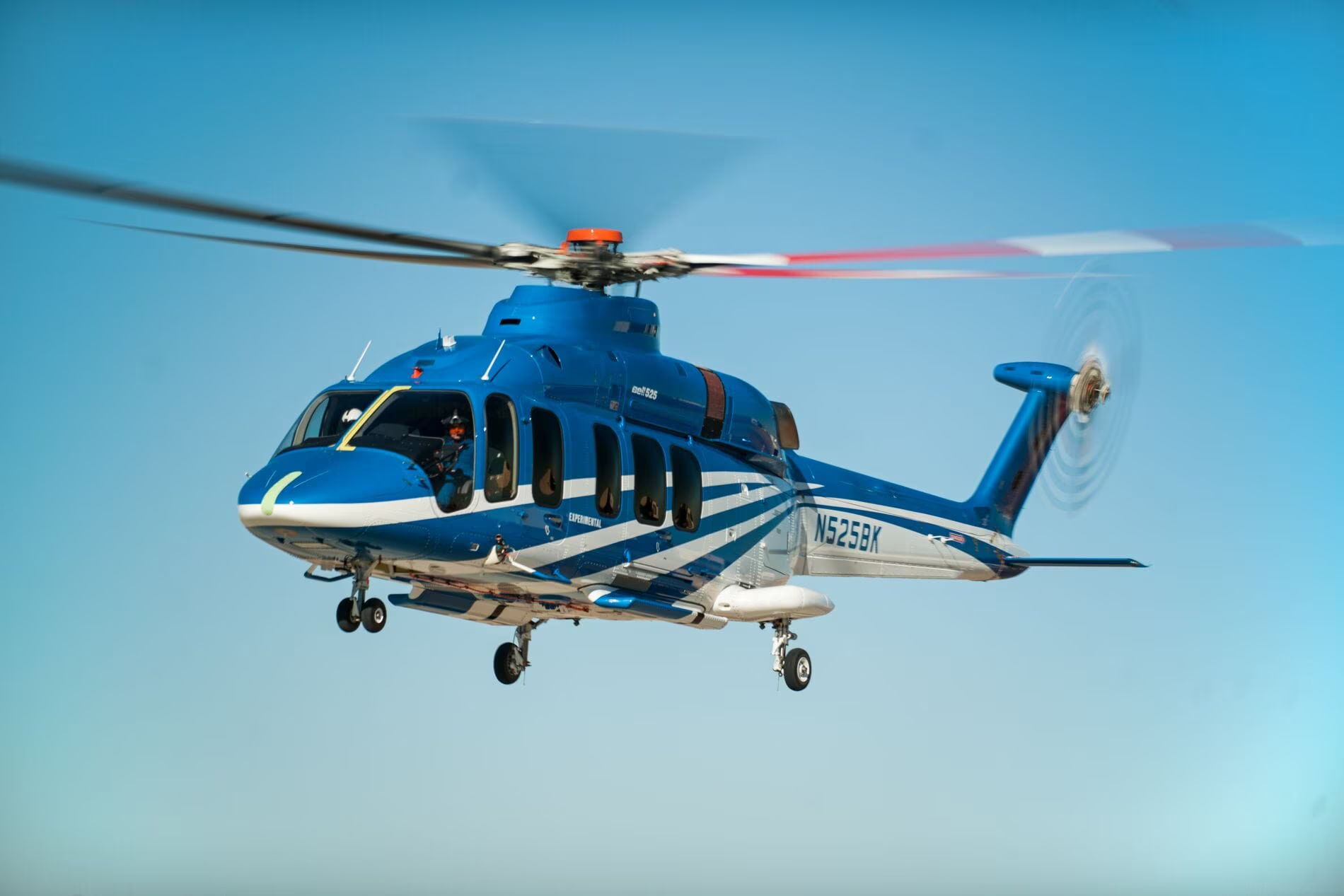
Bell 525 GPS Fix – PAST
During my internship at Bell Flight, I was independently entrusted with a project that has stymied the engineers for months: Why was the Bell 525 making up to 20 ft deviations when yawing in position hold mode? I realized that it was because the CG was placed about 10 ft from the GPS antenna; so, after testing extensively in the simulator, I made the software fix in the controls that will be added to the production model upon certification.
Awards and Recognition
I don’t do what I do for any award…but it certainly is nice to get one or two 🙂

National Science Foundation
Graduate Research Fellowship

AIAA
Graduate GNC Award

Craig & Galen Brown Foundation
Full-Ride Scholarship

Foundation of Former Students
Buck Weirus Spirit Award

Vertical Flight Society